Most home owners do not think about garage door springs up until one breaks. That is understandable. Springs rest above the door or together with the tracks, doing difficult mechanical work quietly and hidden. Yet they are just one of the most vital parts of the whole system. When a springtime compromises or snaps, the door can come to be hefty, misaligned, noisy, or entirely unusable. In some cases, it can additionally come to be dangerous.
The short response is that garage door spring substitute is generally driven less by age alone and much more by cycle life, door weight, everyday use, environment, and exactly how well the rest of the system is preserved. In a regular home, conventional springtimes frequently last somewhere in between 7 and 12 years. In an active family, they can break much sooner. In a reduced usage setting, they might last longer. For business garage door repair, the timeline is generally much shorter due to the fact that the door just opens up and shuts much more often.
If you desire a useful guideline, plan to begin thinking seriously about replacement around the 7 year mark for a common household configuration, and sooner if your garage door is used as the primary entry to your house. That does not mean every springtime requires to be changed specifically on time. It indicates the clever step is to watch for wear before you get stunned by an unexpected failure.
What garage door springs really do
A garage door spring does not simply aid the door step. It counterbalances the weight of the door so the opener and the individual using the door do not birth that full tons. A double garage door can consider a couple hundred extra pounds or even more depending upon material, insulation, and size. Springs store mechanical energy when the door closes and release it as the door opens.
That is why a garage door opener is not indicated to raise a dead weight by itself. The opener guides and controls the activity. The springs do the hefty lifting. When springs weaken, the opener pressures, the wires and rollers take added stress and anxiety, and the whole system wears much faster. I have actually seen several service calls that begun as "the opener is failing" when the genuine issue was a pair old springtimes that had lost stress over time.
There are two usual spring enters household garage door repair. Torsion springtimes place above the door opening and twist on a shaft. Expansion springs extend along the horizontal tracks. Torsion systems are generally extra sturdy, smoother, and safer when correctly set up, which is one factor they are common in more recent garage door installation projects.
Why "how typically" depends upon cycles, not simply years
Spring life is generally ranked in cycles. One cycle is one full opening and one complete closing. Many conventional household springs are rated around 10,000 cycles, though higher cycle choices are readily available. If a household opens up the garage door four times a day, that is roughly 1,460 cycles annually. At that rate, a 10,000 cycle springtime may last near to seven years. If the family utilizes the garage as the primary front door and runs the door eight times a day, that very same springtime might be nearing completion of its life in about 3 to four years.
This is where home owners usually get caught off guard. A garage door that sees frequent use can wear long before it "looks old." A spring is a tiredness component. Each open and close develops stress. Over thousands of reps, the steel progressively sheds resilience.
Commercial buildings are a various group completely. In industrial garage door repair, a door might cycle dozens of times daily. Storage facilities, service bays, filling areas, and car parking structures can burn through typical property quality expectations quickly. For those applications, higher cycle springs and even more frequent evaluation schedules are not a high-end. They are standard operating discipline.
Typical substitute timelines genuine households
A silent house with a separated garage that opens up just a couple of times a day might obtain near a decade or perhaps past from a great collection of springs. An active family members with teenager chauffeurs, delivery traffic, and a garage that functions as the main entrance might require garage door spring replacement in 4 to six years, sometimes sooner.
Material matters as well. A hefty shielded steel door areas various needs on springtimes than a lighter solitary door. So does a timber carriage design door. I have actually seen stunning personalized wood doors that looked excellent from the street however required meticulously matched springtime systems because of the extra weight. If the springs were undersized, use sped up rapidly, and the garage door opener wound up overworked.
Here is a sensible way to consider it:
Light usage, around 2 to 4 cycles a day, commonly lasts 7 to 12 years. Moderate usage, around 4 to 6 cycles a day, frequently lasts 5 to 8 years. Heavy property use, around 6 to 10 cycles a day, can bring replacement into the 3 to 6 year range. Commercial usage differs extensively, however many doors require routine springtime focus far quicker due to high day-to-day cycling.Those are not promises. They are intending ranges. The very same springtime can live a shorter or longer life relying on installment high quality, upkeep, setting, and whether the door is effectively balanced.
The clues that inform you replacement is getting close
Springs hardly ever stop working without leaving tips. The trouble is that the hints are easy to miss if you are not expecting them. The earliest indications are usually subtle. The door may feel somewhat larger when you disengage the opener. It may wait near the flooring. It might knock close a little faster than before or climb erratically. You could listen to much more squeaking, standing out, or a sharp metallic snap if a spring ultimately breaks.
A well balanced garage door should remain about in position if you detach the opener and lift it midway by hand. It ought to not race upward or go down hard. If it does, spring stress may be off, or the springtimes may be used. That is just one of the easiest practical sign in household garage door repair, though it must be done meticulously and just if the door can be safely controlled.
One detail many individuals forget is the visible void in a torsion springtime after damage. A damaged torsion springtime frequently leaves a clear splitting up in the coil. With extension springtimes, you might observe one side hanging in a different way or looking stretched out compared with the other.
Sometimes the opener starts whining before the springs do. If the garage door opener seems stretched, moves slower than normal, or turns around all of a sudden, the issue might not be digital whatsoever. Weak springtimes require the opener to make up. That added effort can reduce the life of equipments, electric motors, braces, and hinges.
Replace one spring or both?
When a two springtime system has one busted spring, the far better method is normally to replace both. Springs in a matched pair often tend to age with each other. If one has fallen short from tiredness, the other is commonly stone's throw behind. Changing only the broken spring can save money in the moment, yet it typically brings about a second service employ the close to future.
There is likewise an equilibrium concern. New and old springs do not execute identically. A fresh spring coupled with a used springtime can develop unequal lifting and extra tension on the shaft, bearings, cables, and opener. In the area, that inequality shows up as jerky movement, additional noise, and early wear elsewhere in the system.
The same concept typically applies in commercial garage door repair, though the decision might rely on system layout, cycle ranking, and functional demands. In either setting, the objective is not simply to get the door relocating once again. It is to recover secure, balanced, predictable performance.
Why springtime replacement should be intended, not just responded to
Many property owners treat springtime failure as an inevitable shock. It does not need to be in this way. Planned replacement has real benefits. You can schedule solution at a hassle-free time, avoid obtaining entraped with an auto within, lower the chance of opener damage, and select updated high cycle springtimes if your current set wore out faster than expected.
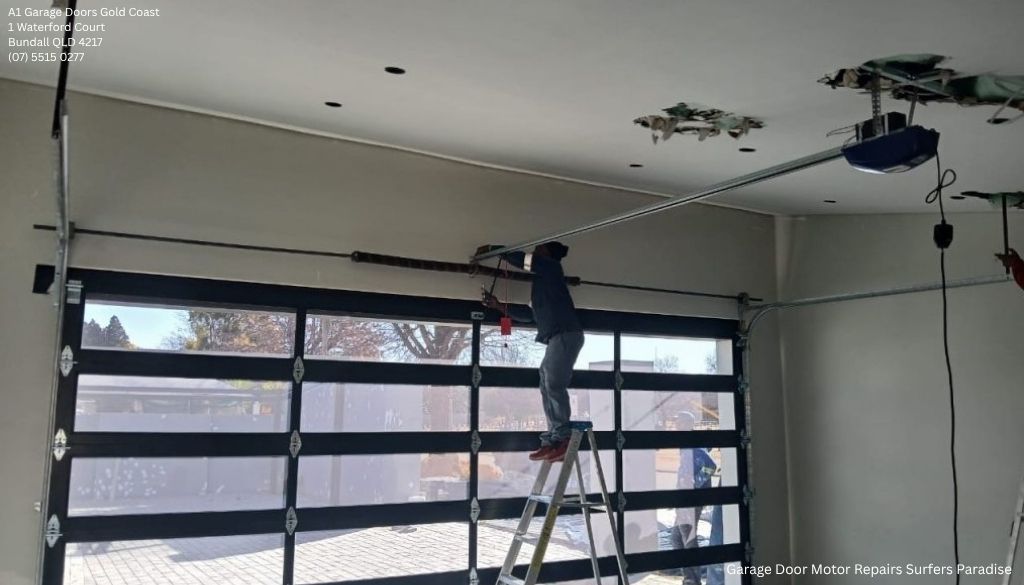
A prepared check out also provides a technician the possibility to evaluate the whole door system. In great garage door repair technique, springs are never ever an isolated component. The condition of the drums, cables, center bearing, end bearing plates, rollers, hinges, track placement, and opener settings all affect spring efficiency. A door that runs out equilibrium or dragging in the tracks will certainly wear springtimes quicker. So will certainly a door with inadequate roller motion or torn cables.
I bear in mind one home owner that kept changing openers every couple of years due to the fact that each one ultimately "quit pulling." The real issue was a hefty protected door with incorrect spring sizing and curved track areas from an old influence. As soon as the door was effectively well balanced and the track fixed, the next opener lasted usually. That kind of scenario is much more common than people think.
Seasonal weather condition and deterioration matter greater than individuals expect
Climate plays a peaceful but crucial role in spring life. In moist or coastal areas, rust can deteriorate steel gradually. In position with big temperature swings, cold weather can make minimal springtimes more likely to fail due to the fact that the metal becomes less flexible and lube thickens. It prevails to hear about a springtime breaking on a cold early morning after seeming fine the evening before.
Rust is not just cosmetic. Corrosion creates surface roughness, and roughness increases rubbing between coils on torsion springs. That added friction can speed up wear and cause noisy procedure. A little precautionary maintenance can assist, but it can not reverse metal exhaustion once the springtime is near the end of its ranked life.
If your garage is not climate regulated and the door gets utilized greatly through all seasons, it makes good sense to check springtime condition extra closely after 5 to 7 years, even if no apparent failing has actually taken place. The cost of checking is moderate compared with the inconvenience of a break at the worst feasible time.
Maintenance behaviors that can stretch spring life
No maintenance regimen can make springtimes last permanently, but good treatment can aid them reach their intended life expectancy and lower stress on the whole door system. The fundamentals are not made complex, yet consistency matters.
Listen to the door once a month. New grinding, standing out, or stressing noises deserve attention. Watch the door step. Jerky travel, uneven lifting, or a door that does not sit level can signal spring or wire issues. Keep rollers, hinges, and springs lightly lubricated with an item meant for garage doors. Schedule routine solution if the door gets hefty usage or if it is older than 5 to 7 years. Test balance carefully with the opener disengaged, but only if you can do it securely and the door is not already revealing indications of failure.One caution below: lubrication helps reduce friction and sound, but it does not "fix" a worn spring. People in some cases hear less sound after lubing and assume the trouble is resolved. Actually, the springtime might still be nearing the end.
Does a brand-new garage door change the spring schedule?
Yes, due to the fact that brand-new garage door setup frequently changes the weight and balance attributes of the system. If you update from an older non protected door to a thicker insulated version, or button from steel to timber, the original springtimes might no longer be proper. Springs must match the real door weight and drum configuration. Even small inequalities can bring about bad equilibrium and shorter spring life.
This is likewise why spring work must not be dealt with as a common parts swap. The ideal spring is picked by greater than door size. Height, weight, wire drum size, shaft arrangement, and needed cycle life all issue. An effectively sized spring set can boost door feel, reduce opener pressure, and Southport QLD garage door technicians reduce repeat repairs.
When a new door enters, ask what cycle rating the springs have and whether an updated option is offered. The price distinction in between basic and high cycle springs is frequently sensible compared with the labor expense of future substitute. For a household that utilizes the garage regularly, updating at the beginning can be cash well spent.
How the opener fits into the picture
A garage door opener is usually condemned for issues that start with spring wear. That is not entirely unreasonable, due to the fact that opener symptoms are what most individuals notice initially. The remote quiting working continually. The motor seems loud. The safety and security reverse ends up being erratic. The rail trembles more than typical. However in most cases, the opener is not the root issue.
Think of the opener as a supervisor, not a laborer. It controls activity yet needs to not be doing the real training. A well balanced door can typically be lifted by hand with modest initiative. If your opener is pulling tough daily because weak springs are no longer doing their share, the opener will certainly pay the price.
That is why a specialist doing straightforward garage door repair checks balance prior to selling opener parts. It is additionally why spring substitute and opener modification frequently go together. When brand-new springs are mounted, opener force settings and travel limitations may need great adjusting so the entire system works smoothly.
Safety is the main factor this work belongs to a pro
There are home projects that reward patience and careful understanding. Garage door spring replacement is generally not one of them. Torsion springs are wound under considerable tension. An error with winding bars, established screws, or door safeguarding can cause major injury. Expansion spring systems have their own threats, especially if safety and security cable televisions are missing or damaged.
This is not scare talk. It is merely a classification of repair where the kept power suffices to do genuine harm. A seasoned professional knows how to safeguard the door, choose the appropriate springtime, set proper tension, check cable television alignment, verify equilibrium, and check related equipment before returning the door to service.
Professional property garage door repair additionally assists you prevent a 2nd trouble, which is setting up the incorrect springtime. A door might show up to benefit a while with an inaccurate springtime, yet the pressure appears later in the opener, cords, drums, and door sections.
When commercial doors require a different strategy
Commercial garage door repair deserves different treatment due to the fact that the operating demands are so different. A rolling steel solution door at a stockroom or an overhead sectional door at a vehicle shop can cycle even more in one month than a home door does in a year. Because setting, awaiting apparent signs and symptoms is not a sound strategy.
A prepared maintenance schedule is the far better strategy. High cycle springs, regular balance checks, and documented assessments minimize downtime and aid avoid safety and security cases. If a commercial door is part of daily operations, springtime failing is not just troublesome. It can interrupt delivery, block car gain access to, and create obligation worries if the opening is left unsecured.
For building supervisors, the question is less "just how usually should springtimes be changed" and much more "just how do we match the springtime schedule to actual usage." If a door is goal critical, spring replacement need to be positive as opposed to reactive.
A practical preparation method for homeowners
If you have no concept exactly how old your springs are, begin with observation and a service check. Learn whether your system makes use of torsion or extension springs, whether there is one springtime or more, and whether the door is correctly stabilized. Ask the service technician for the likely cycle rating and whether the springtimes show up initial to the door.
If your springtimes are past seven years old and the garage sees day-to-day usage, it is reasonable to begin budgeting for garage door spring replacement, even if the door still functions. If your family counts on the garage as the major entry, that budget plan needs to be a little bit higher on the top priority list than many individuals recognize. A stopped working spring tends to occur on a workday early morning, not when the timing is convenient.
Homeowners that are currently arranging garage door setup, major garage door repair, or a garage door opener substitute ought to likewise ask whether the springs are still suitable for the arrangement. Combining relevant job can save labor and prevent a piecemeal repair cycle.
The ideal timing is not a fixed schedule date. It is the factor where age, use, and symptoms start to align. For many homes, that moment arrives between year five and year eight. For hefty usage homes, it can come previously. For lightly utilized doors with well matched equipment, it can come later on. The objective is not to change springtimes ahead of time. It is to change them before they stop working at full trouble and full risk.
A garage door can look basic from the driveway, however the spring system is doing sophisticated, requiring job each and every single day. Focus on use, pay attention to the door, and deal with springtime replacement as planned maintenance as opposed to an emergency. That method protects the opener, expands the life of the door system, and maintains among the busiest access points in your home working the way it should.